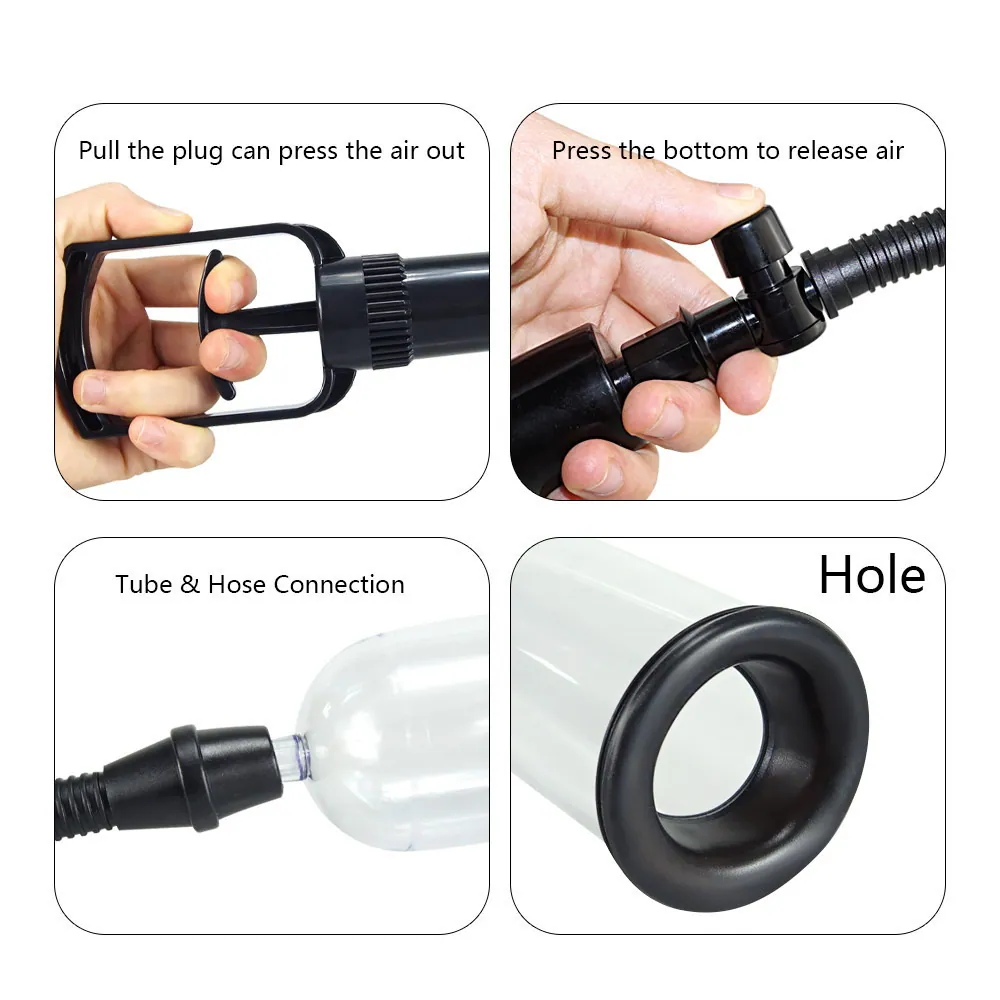
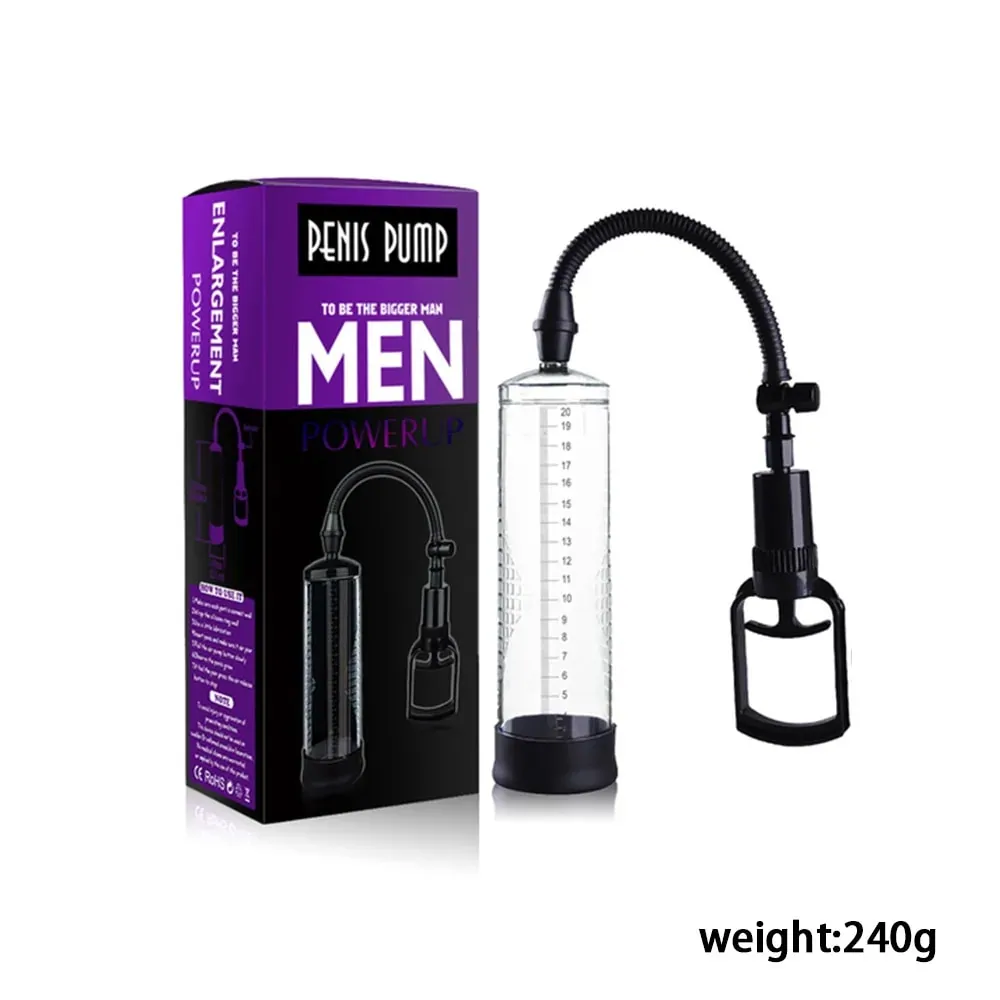
205 mm clear cylinder with a 58 mm bore and a 68 mm base, per the supplier panel; printed 8 cm to 18 cm scale up the clear wall, readable from above; hand-grip pump body — pull the handle, press the button underneath to release.
A hand-grip pump in three parts: a clear cylinder with a printed scale up the side, a ribbed hose, and a grip-style pump body. You pull the handle to draw air out, press the button underneath to let the pressure back, and a silicone seal in the base is what holds the vacuum. There is no motor and no battery, so nothing needs charging and there is no runtime to plan around.
The cylinder is the part that decides whether this suits you. The supplier's panel marks it 205 mm tall with a 58 mm bore and a 68 mm base, and ships three spare seals of different sizes. One caveat worth stating before you buy: a second image on the same listing marks the cylinder at 185 mm with a 56 mm bore. Two figures on one product is the supplier's inconsistency, not a rounding difference, so both are printed here rather than one being picked. If the exact measurement matters to you, ask before ordering and we will measure a unit.
That 58 mm bore is wide relative to a 205 mm cylinder, which is deliberate — clearance at the base is what stops the rim pinching as the seal compresses. The trade is that a wider bore needs a better seal to hold the same vacuum, which is why three spare seals ship in the box. The seal is also the part that wears first: a pump that slowly stops holding is almost always a tired seal, not a broken valve.
The handle is a grip frame rather than a bulb. You squeeze and release it, so pressure is set by how far you pull, not by how hard you squeeze — the difference matters because a bulb gives you no repeatable reference, and this gives you one. Underneath sits a release button that vents the cylinder in a single press, so you never have to break the seal at the base to get out. Anyone who has pulled a stuck cylinder off knows why that button is the most important part here.
An 8 cm to 18 cm scale is printed up the clear wall and readable from above, so the level can be compared between sessions instead of judged by feel. That printed scale is the only measurement a manual pump gives you, and it is the reason to read the side rather than go by sensation.
Nothing here is electric. No motor, no charging port, no runtime, and no motor noise — the only sound is the valve. That makes it the quieter of the two pumps we stock by a wide margin, and the one with nothing that can run flat mid-session.
Materials are a clear ABS cylinder, a ribbed PVC hose and a silicone base seal, with a black plastic pump body and handle. Body-safe throughout, and the hose detaches at both ends so the cylinder and seals can be washed separately from the pump body.
Cleaning is the part people get wrong. Detach the hose, wash the cylinder and the seals in warm water with mild soap, and wipe the pump body rather than soaking it — the body is not sealed for immersion. Stand the cylinder upside down to drain and air-dry, because water left sitting in the tube is what makes the next session smell. Swap in one of the spare seals when the pump stops holding.
Use water-based lubricant on the seal, not oil-based. The seal is silicone, and oil-based lubricant degrades silicone over repeated use — the first sign is a seal that stops seating cleanly.
A session is 10 to 15 minutes with a break in between. Release the pressure at the first sign of pain, tingling or a colour change rather than pushing through it; that signal is the reason the release button exists. This is a pump for temporary swelling during a session. It is not a device for any condition, and it does not produce permanent change — the before-and-after artwork some suppliers use is marketing rather than evidence. If you have a vascular or urinary problem, speak to a doctor rather than pumping.