
IntimateToysUAE · Guide · Updated 26 October 2026
How to Receive a Discreet Parcel in the UAE Without Questions
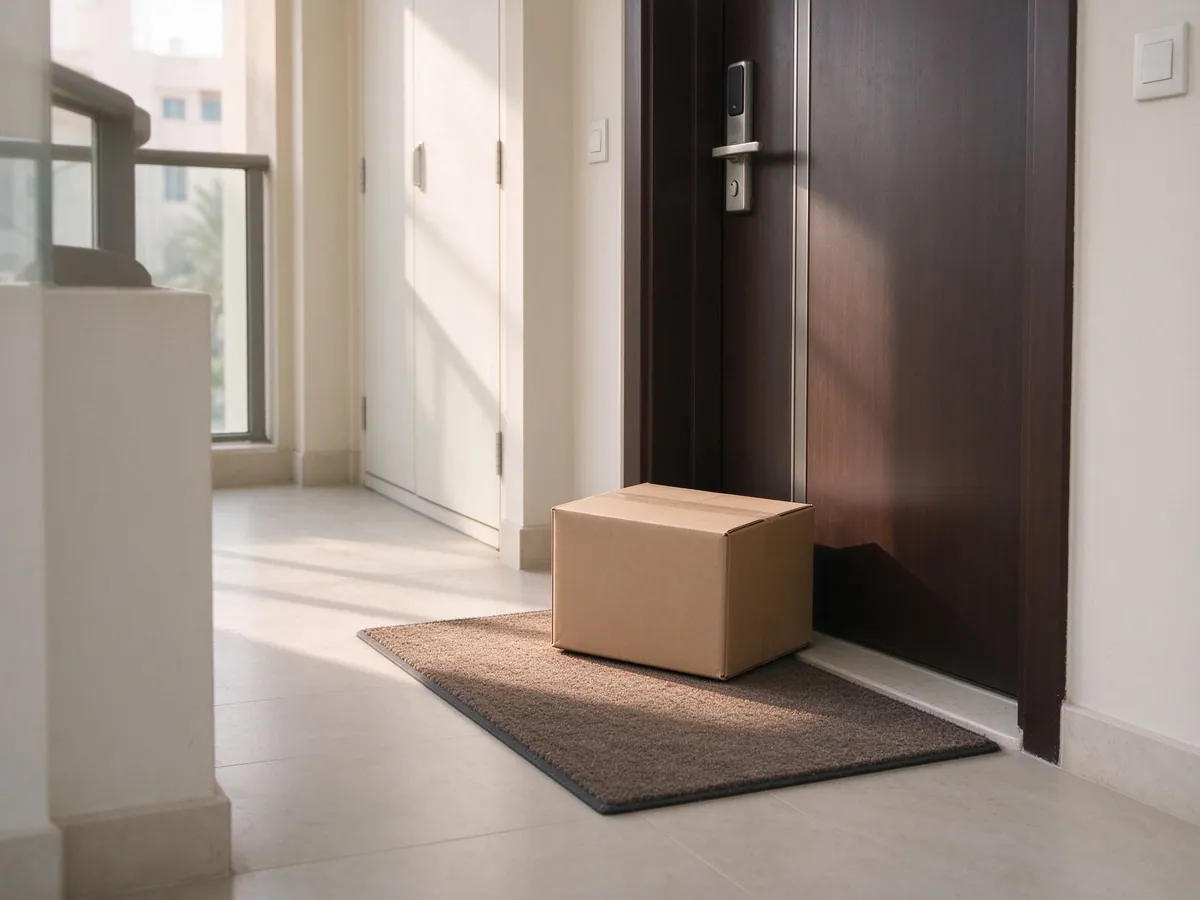
The order is the easy part. The hard part is the knock on the door, the building receptionist, or the flatmate who gets there first. This guide is about that second half: how to receive a parcel in the UAE without answering questions you would rather not answer, whether you live alone or share a flat with three people.
If you have already ordered and want to know what happens next, the discreet delivery and cash on delivery guide covers the process end to end. This page is narrower and more practical: it is about the ten minutes around the delivery.
What does the parcel actually look like?
A plain outer box or bag with a shipping label. No product name, no shop branding beyond what a courier needs, and nothing describing the contents. If someone picks it up and reads the label, they learn a name and an address, not what is inside.
That is the honest description, and it has a limit worth naming: a plain parcel is not a disguise. If whoever receives it knows what you ordered, the packaging does not make it look like something else. What it does is stop a curious neighbour, a porter or a colleague from learning anything by looking.
Who is going to be at the door?
This is the question to settle before you order, because the answer changes what you should put in the address field.
If you live alone — straightforward. Give the building and flat number, and the courier calls before arriving.
If you share a flat — the risk is not the courier, it is the flatmate. Two things help: give your own mobile number so the call comes to you and not to someone else, and if you can, arrange a delivery window when you will be in. If you cannot, ask on WhatsApp whether a specific day can be targeted; that is a reasonable request and it is better than hoping.
If you live in a building with a reception or a compound with a guard — the parcel will often be handed over at the desk, and the label is all the information anyone there gets. That is usually fine. If you would rather it did not sit at reception at all, say so when we confirm the order and we can note it for the driver.
If you are in staff accommodation or a shared villa — address it to your own name and your own mobile. A parcel addressed to a name that nobody recognises is the one that gets opened, asked about, or left in a corridor.
What the shipping label says, and what it does not?
The label carries what a courier needs to deliver: your name, your phone number, the address, and a reference. It does not carry a product description, and it does not name the shop in a way that describes what is being sold.
What it cannot hide is the return address, because a parcel that cannot be returned is a parcel a courier will not carry. If someone is determined to look up an address on a label, they can. What the label is designed to prevent is the casual reading — the person who glances at it while signing, or who picks it up off a desk.
Can the courier call before arriving?
Yes, and this is the single most useful thing about how these orders are handled. Your number goes on the order and the driver calls to confirm before coming up. That is also where the address gets sharpened: "Arjan south" is a district, and the call is what turns it into a building and a flat.
Which means the number you give matters more than the address you give. Use the number you will actually answer. A number that goes to voicemail, or to someone else's phone, is how a delivery becomes a missed delivery and then a second conversation you did not want to have.
What about paying in front of someone?
Cash on delivery means paying at the door, which is the one moment when a parcel is visible and so is the transaction. Three things make that less awkward:
- Have the amount ready. You are told the total when the order is confirmed on WhatsApp, so count it out beforehand rather than opening a wallet in a doorway.
- The driver has no reason to say what it is. Couriers deliver hundreds of parcels a day and are not in the habit of announcing contents.
- Card and digital payment exist if you would rather not handle cash. If you pay in advance, there is no transaction at the door at all, which is the most private version of the process — at the cost of paying before you have the parcel in your hands.
The cash on delivery receipt guide explains what appears on the paperwork, including what a bank statement would and would not show.
Can you collect it somewhere instead?
This is the question people ask when home delivery is genuinely not workable, and it is worth being straight about the answer: this is not a click-and-collect service. Parcels go to an address, not to a locker, and there is no counter to walk into.
If home delivery will not work, the practical options are to use an address where you will be present when the call comes, or to ask on WhatsApp before ordering whether something can be arranged. Saying no to a request is better than accepting one and failing at the door.
What if you are not there when the driver arrives?
The driver calls. If you do not answer, the usual outcome is a second attempt rather than a parcel left in a hallway — but "usual" is not "guaranteed", and a missed delivery costs a day.
The way to avoid it is the same as above: a number you will answer, during hours you are likely to be reachable. If you know you will be unreachable on a particular day, say so at the confirmation stage rather than discovering it when the phone rings.
What about a neighbour or a family member receiving it?
It happens, and it is usually fine, because the packaging gives nothing away. The person receiving it learns it is a parcel for you — nothing more.
The exception is when the person receiving it is the person you were keeping it from. If that is the situation, no packaging solves it, and the honest advice is to arrange delivery for a time you will be there yourself.
How does this compare with ordering abroad?
Ordering from outside the UAE is a different process with a different set of risks: the parcel crosses a border, goes through customs, and the screening is done by officials rather than a courier. That is where the stories about items being confiscated come from, and the guide to whether these products are legal in the UAE covers what that means in practice.
A domestic order does not cross a border. It moves between two addresses inside the country, handled by a courier, and the questions that apply to international post are not the questions that apply here.
What should you check before you pay?
Four things, at the door, in this order:
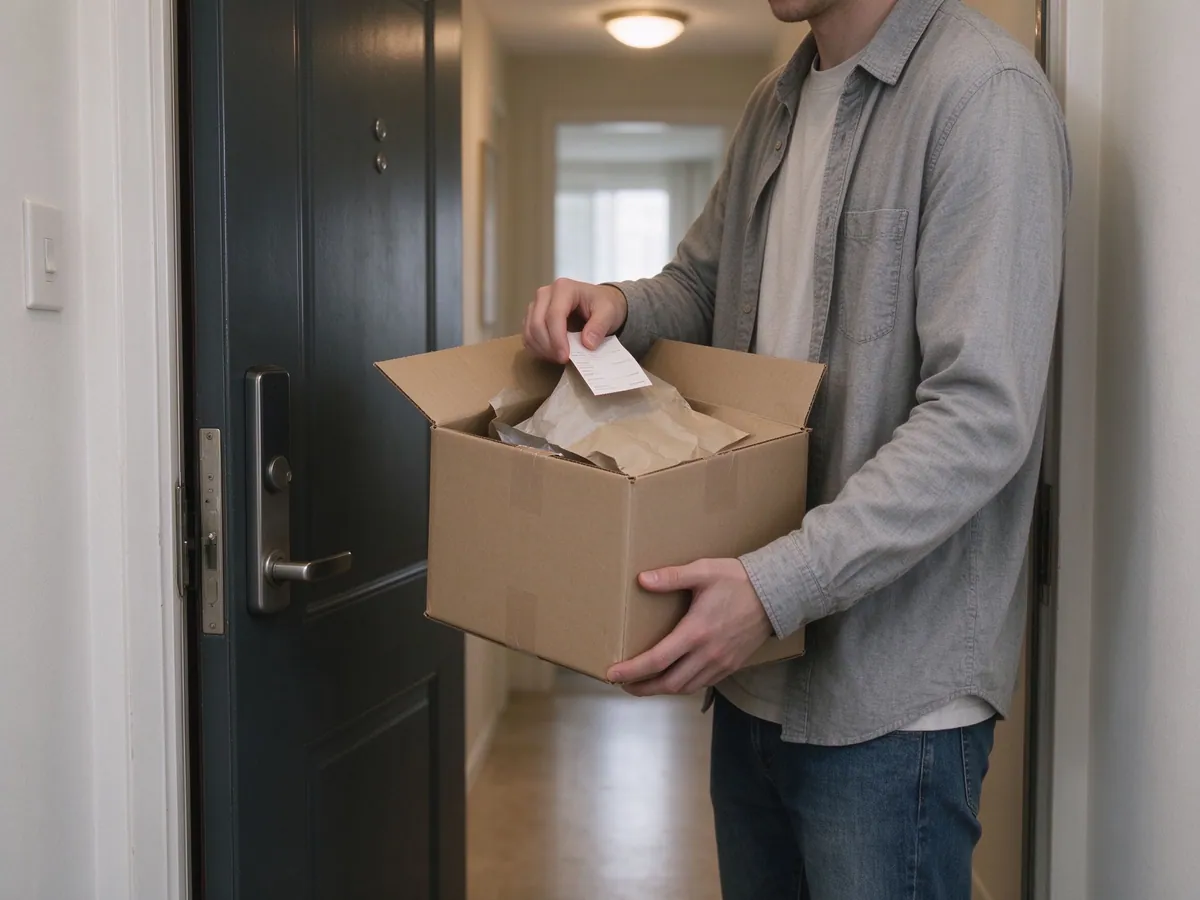
- The parcel is sealed and undamaged. A torn outer bag is a reason to open it in front of the driver, not to accept it and hope.
- The name on the label is yours.
- The amount matches what was confirmed on WhatsApp.
- You know what to do if something is wrong — which is a message, not an argument at the door.
The cash on delivery receipt guide covers the last one in detail, including what counts as a damaged-item claim and what does not.
What usually goes wrong, and how to prevent it?
Almost every delivery problem traces back to one of three things, and all three are decided before the parcel leaves:
- A phone number that is not answered. The most common cause of a failed delivery by a wide margin.
- An address that stops at the district. "Al Barsha south" gets a driver to a neighbourhood; a building name and flat number gets them to your door.
- A timing assumption. One to five working days is the honest range, not a promise of next-day arrival. If a specific day matters, ask before ordering and you will get a straight answer rather than a hopeful one.
None of those are about discretion. They are about the ordinary mechanics of getting a parcel to a person, which is what determines whether the discreet part ever gets a chance to work.
Frequently asked questions
Will the courier know what is inside the parcel?
The courier has an address, a name and a phone number. The label does not describe the contents, and drivers are not briefed on what any individual parcel holds.
Can I have it delivered to my office?
You can, and some people do, but it is worth thinking through: an office means a receptionist, a mailroom, or a colleague who signs for it. The packaging gives nothing away, but the parcel still arrives in front of people. If that matters to you, home delivery with a call ahead is usually the quieter option.
Can I collect it from a store or locker instead?
No. This is a delivery service, not click-and-collect. Parcels go to an address.
What if someone else in my building signs for it?
That is common in buildings with a reception, and it is usually harmless because the packaging reveals nothing. If you would rather it came to your door, mention it when the order is confirmed.
Does the packaging say the shop name?
The label carries what a courier needs to route and return the parcel. It does not describe the contents. What it cannot do is hide the return address, because a parcel that cannot be returned will not be carried.
Will they call before coming?
Yes. Your number is on the order and the driver calls before arriving, which is also when the address gets confirmed down to the building and flat.
What if I am not home?
The driver calls first. A missed call usually means a second attempt rather than a parcel left somewhere, but it costs a day, so give a number you will actually answer.
Can I change the delivery address after ordering?
Ask on WhatsApp as early as possible. Before dispatch it is usually a simple change; after dispatch it depends on where the parcel already is, so the earlier the better.
Is delivery to a shared flat a problem?
Not for the packaging. The thing to get right is the phone number, so the call comes to you rather than to whoever else is in the flat that afternoon.
How long does delivery take?
One to five working days across the UAE. That is a range rather than a fixed promise, and if a particular day matters it is worth asking before you order.
What is easiest to receive without explanation?
Small parcels cause the least friction: they fit through a letterbox slot or into a bag, and there is nothing to explain to whoever takes delivery. A 10-pack of ultra-thin condoms, a 6ml intimate gel or a single-use lubricant sachet all arrive in the same plain outer packaging as anything else. If you would rather compare before choosing, the water-based lubricants and protection range is the smallest starting point.
Where to read next
- Discreet delivery and cash on delivery across the UAE — the full process, from order to doorstep
- Paying cash on delivery: receipts and records — what the paperwork shows and what it does not
- Is it legal to buy these products in the UAE? — the legal question, answered plainly
- First time ordering intimate products online in the UAE — what to expect on a first order
Products in This Guide
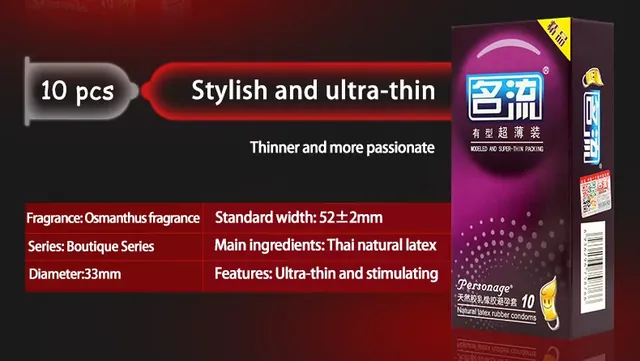
Ultra Thin Condoms UAE – 10 Pack Natural Feel
10 pack · 52 mm nominal width · 33 mm rolled diameter

Water-Based Lubricant 6ml UAE – Single-Use Sachets
Single-use sachets · Tear-open corner · Water-based

Intimate Gel 6ml UAE – Water-Based Hydrating Formula
Water-based · Non-sticky finish · 6 ml travel size
Helpful Answers
Will the courier know what is inside the parcel?
The courier has an address, a name and a phone number. The label does not describe the contents, and drivers are not briefed on what any individual parcel holds.
Can I have it delivered to my office?
You can, and some people do, but it is worth thinking through: an office means a receptionist, a mailroom, or a colleague who signs for it. The packaging gives nothing away, but the parcel still arrives in front of people. If that matters to you, home delivery with a call ahead is usually the quieter option.
Can I collect it from a store or locker instead?
No. This is a delivery service, not click-and-collect. Parcels go to an address.
What if someone else in my building signs for it?
That is common in buildings with a reception, and it is usually harmless because the packaging reveals nothing. If you would rather it came to your door, mention it when the order is confirmed.
Does the packaging say the shop name?
The label carries what a courier needs to route and return the parcel. It does not describe the contents. What it cannot do is hide the return address, because a parcel that cannot be returned will not be carried.
Will they call before coming?
Yes. Your number is on the order and the driver calls before arriving, which is also when the address gets confirmed down to the building and flat.
What if I am not home?
The driver calls first. A missed call usually means a second attempt rather than a parcel left somewhere, but it costs a day, so give a number you will actually answer.
Can I change the delivery address after ordering?
Ask on WhatsApp as early as possible. Before dispatch it is usually a simple change; after dispatch it depends on where the parcel already is, so the earlier the better.
Is delivery to a shared flat a problem?
Not for the packaging. The thing to get right is the phone number, so the call comes to you rather than to whoever else is in the flat that afternoon.
How long does delivery take?
One to five working days across the UAE. That is a range rather than a fixed promise, and if a particular day matters it is worth asking before you order.
Continue Reading
More guides from the journal — the same plain writing on choosing, using and caring for these products in the UAE.
Guide
Discreet Delivery and Cash on Delivery Across the UAE
Plain packaging, WhatsApp confirmation and realistic delivery windows — the practical detail before you place an order.
Guide
Paying Cash on Delivery in the UAE: Receipts and Records
This shop takes cash on delivery only, so nothing reaches a bank statement and a paper receipt arrives with the parcel. What the receipt contains, what to check at the door, and what happens if something goes wrong.

Guide
Is It Legal to Buy Adult Toys in the UAE? (2026)
Most people in the UAE ask one thing before they buy: is it legal? The plain answer for private, personal use, plus how discreet delivery and cash on delivery work.
That is the short version on discreet parcel delivery uae.